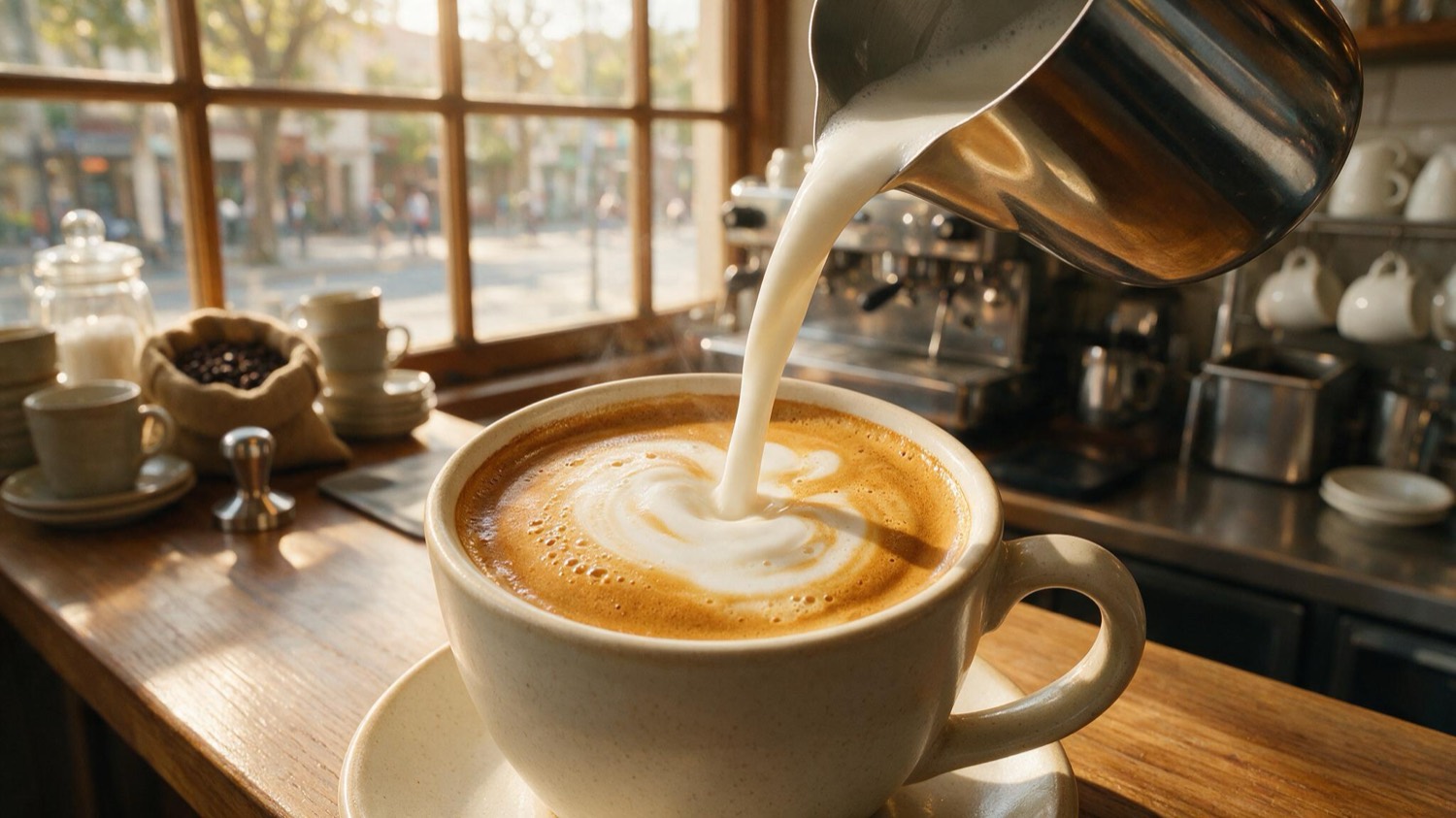
Some revolutions arrive with manifestos. This one arrived with a lactose intolerance problem and a bag of oats.
In the early 1990s, a food scientist named Rickard Öste was working in the Department of Food Technology at Lund University in southern Sweden. He wasn't trying to build a billion-dollar brand or reinvent the dairy aisle. He was interested in a fairly unglamorous question: how do you feed people who can't digest cow's milk, using crops that actually grow well in a cold northern climate? Oats grow beautifully in Scandinavia. Almonds and soybeans do not. The logic more or less wrote itself.
What Öste and his team eventually cracked was not a recipe but a process — and that distinction is the whole story.
The enzyme that cracked it
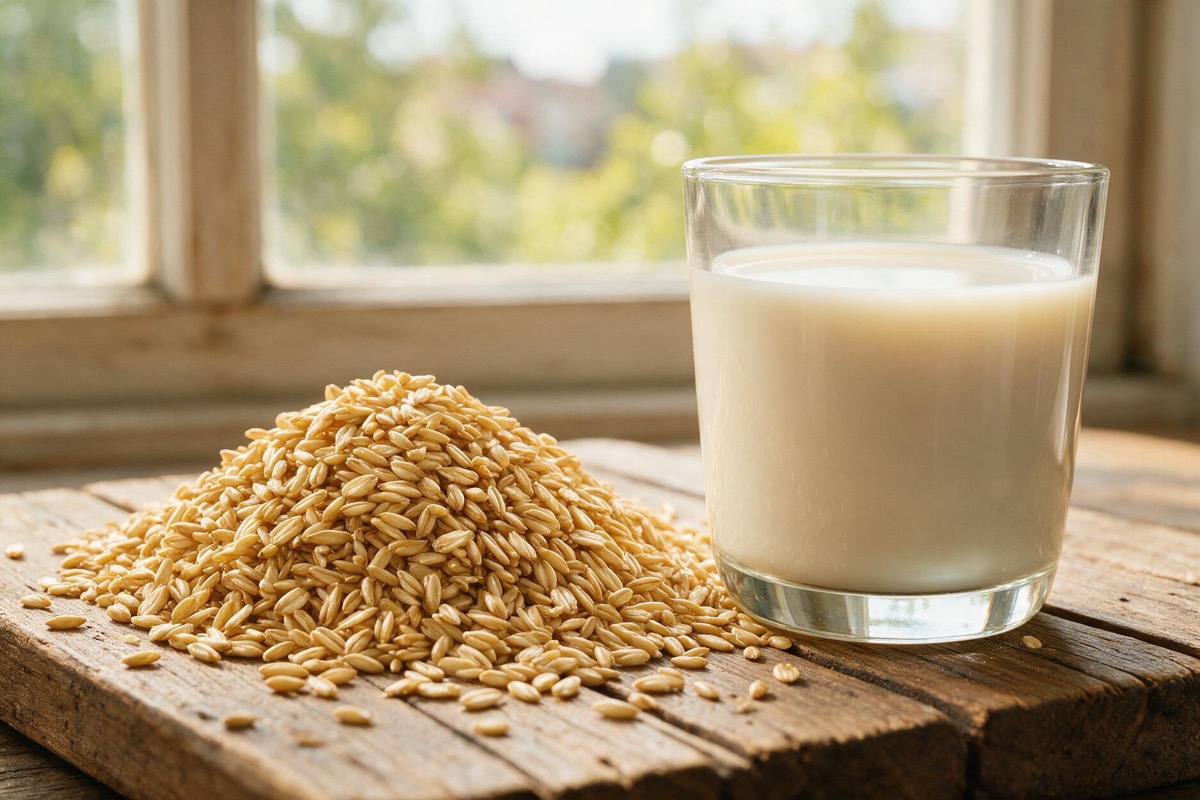
Blend raw oats with water and you get a gritty, gluey, faintly porridge-flavoured sludge. Oats are dense with starch, and starch is stubborn: it thickens, it separates, it refuses to behave like milk. Öste's insight was to borrow a trick from biology. By introducing enzymes — principally amylase, the same starch-splitting enzyme your own saliva uses — the team could break the oats' long starch chains down into smaller sugars, leaving a naturally sweet, pourable, creamy liquid without a grain of added sugar.
Crucially, the process was designed to keep the good stuff intact, particularly beta-glucan, the soluble fibre that gives oat milk its silkiness and its cholesterol-lowering reputation. Öste patented the method, and in 1994 he co-founded a company with his brother Björn to sell it. They called it Oatly. Decades later, in 2021, Öste would share Sweden's prestigious Polhem Prize for the underlying innovation — a rare bit of national recognition for turning a cereal crop into a beverage category.
Two decades in the wilderness
Here is the part the marketing myth tends to skip: Oatly spent roughly its first twenty years going almost nowhere.
Through the 1990s and 2000s, oat milk was a worthy health-food product, sold to the lactose-intolerant and the curious, sitting on the bottom shelf next to the soya and the rice drink. It was fine. It was Swedish. It was largely ignored. Almond milk, riding the low-calorie wave, was the alternative milk everyone actually talked about. Oatly, by most accounts, was a company with a clever patent and no cultural momentum.
The turnaround, when it came, was partly the work of a brand overhaul — the loud, wink-at-you packaging and "It's like milk but made for humans" cheek that became Oatly's signature. But the real accelerant was a decision about where to sell.
The barista gambit
Instead of fighting for supermarket shelf space, Oatly went after baristas. In the mid-2010s it introduced Oatly Barista Edition, a formulation tuned specifically for the espresso machine, and seeded it into exactly the sort of third-wave coffee shops in New York, London, Berlin and Portland where taste-makers order their flat whites.
The distribution logic was shrewd: a barista who loves your product becomes an unpaid, trusted evangelist to hundreds of customers a day. People tried oat milk in a cortado they already trusted, liked it, and went looking for it in the shops. By the end of the decade the pull was so strong it tipped into farce: the industry still half-jokingly remembers the "great Oatly shortage" of 2019, when American cafés ran dry and cartons were changing hands at a mark-up.
The barista blend worked where ordinary oat milk failed for reasons of plain food science — worth understanding if you've ever wondered why your home carton curdles into the cup while the café's foams like a dream.
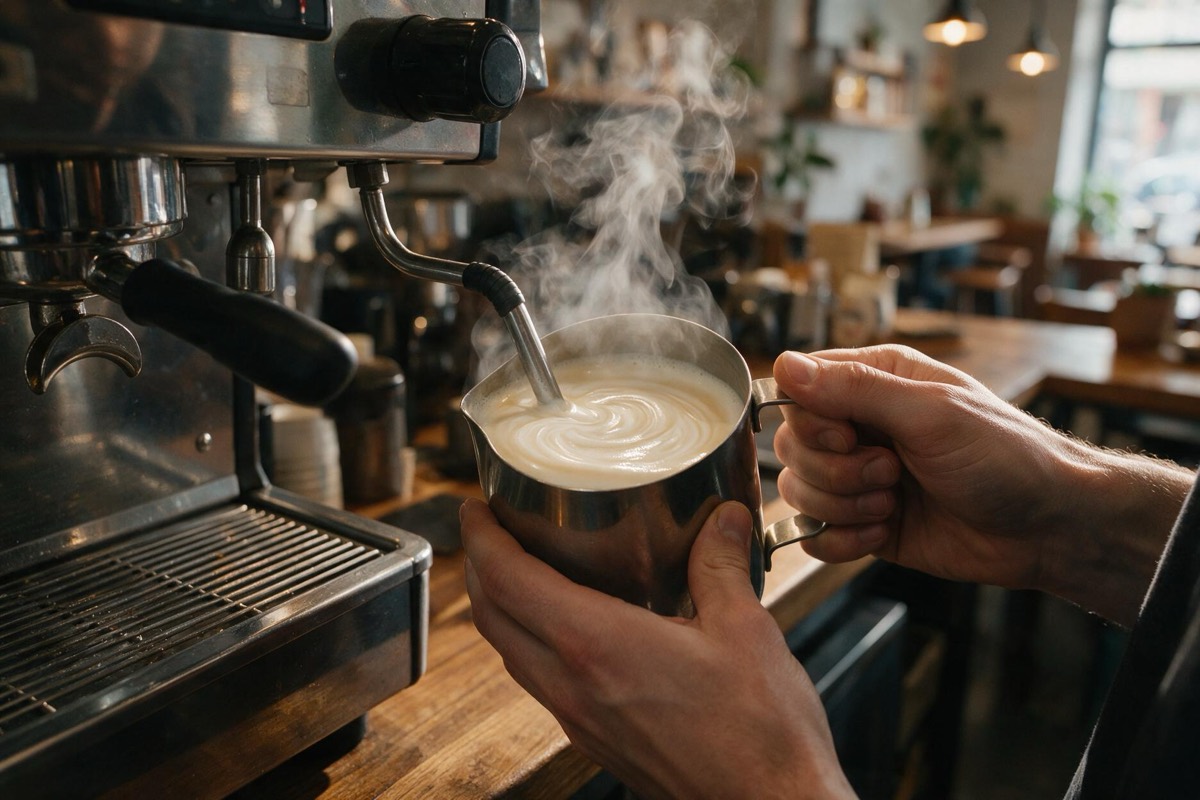
Espresso is acidic — a pH somewhere around 5. Drop plain plant milk into that hot, acidic environment and the proteins can destabilise and clump, the dreaded "split". Barista formulations fight back on three fronts: a touch more oil (often rapeseed) to carry richness and build a glossy microfoam; added minerals like calcium; and, most importantly, an acidity regulator such as dipotassium phosphate that buffers the pH and stops the proteins from panicking on contact with the coffee. The result steams, stretches and pours like a dairy barista's muscle memory expects. If you want to get that same silky foam at home, our dairy-free tips page breaks down the technique — because a lot of "bad oat milk" is really just the wrong carton, or a jug steamed too hot.
From foodie fad to a $10 billion float
Coffee was the beachhead; the mainstream followed. Oat milk stormed the supermarkets, colonised the coffee chains — including a headline deal with Starbucks — and by May 2021 Oatly floated on Nasdaq in an IPO that valued the once-obscure Swedish firm at around $10 billion, with Oprah Winfrey and Blackstone among its backers. Oat milk had, improbably, become a financial-markets story.
And then, just as improbably, the hype met the hangover.
Determined to keep up with runaway demand, Oatly poured hundreds of millions into new factories on three continents. The building spree ran ahead of the company's ability to actually run the plants smoothly; production targets were missed, some regions ended up oversupplied while others still couldn't get stock, and the share price cratered — down the best part of 80% in 2022 as execution problems piled up. The lesson was an old one dressed in oat-coloured clothing: inventing a category isn't the same as industrialising it, and a cult product doesn't automatically become a well-run global business.
What the oats really proved
Strip away the stock-price drama and something durable remains. Oat milk is now a fixture — the fastest-growing plant milk of the era, and in Britain the default alternative in a great many coffee shops. Even amid a recent flicker of dairy nostalgia in specialty coffee, oat's place at the counter looks secure.
It earned that place honestly. Oats are cheap, they grow in temperate climates close to where they're drunk, and their environmental footprint is a fraction of dairy's across land, water and emissions, according to the data compiled by Our World in Data. A creamy, low-impact, home-grown milk that happens to taste lovely in coffee is no gimmick. It took a patient scientist, a clever enzyme and thirty years to land.
Rickard Öste set out to solve a digestion problem in a Swedish lab. He ended up changing what "milk" means in a café — which, given the long human history of pressing plants into milk, is really just the newest chapter of a very old story. Fancy a go? Our oat milk recipes and the 7-Day Challenge are the friendliest place to start.