Home → Impact
Good for people,
animals and planet.
Every glass of plant milk is a small, quiet vote for a lighter footprint. Here's the evidence, minus the lecture.
Little choices. Big impact. ♡
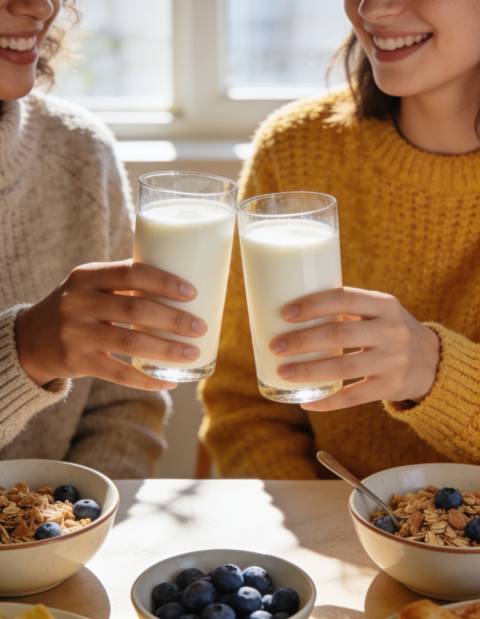 People
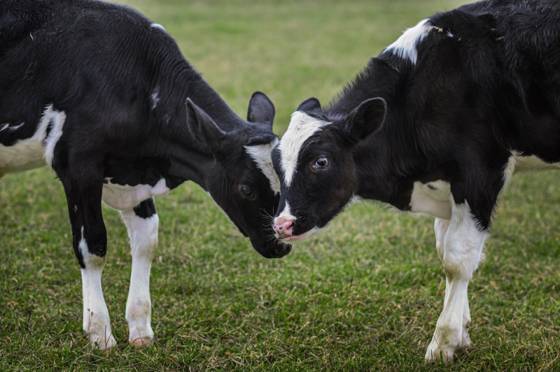 Animals
 Planet

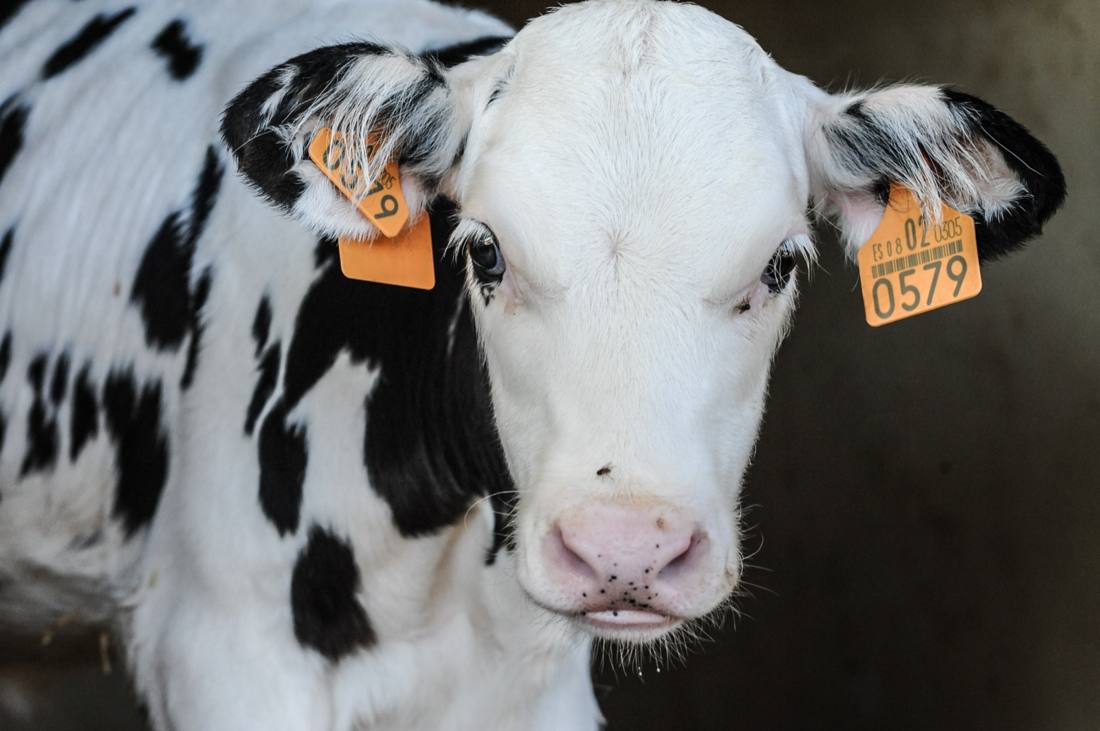
Calves: Jo-Anne McArthur / We Animals
Headline figures from the largest meta-analysis of global food systems: J. Poore & T. Nemecek (2018), Reducing food's environmental impacts through producers and consumers, Science — ~38,700 farms, 119 countries — as summarised by Our World in Data. Lactose figure: Storhaug, Fosse & Fadnes (2017), The Lancet Gastroenterology & Hepatology. Nutrition figures reflect typical fortified UK cartons.
Climate, land
and water
Dairy milk's footprint towers over every plant milk on every measure — emissions, land and water. Here's what the everyday glass actually costs, source by source.
Greenhouse gases
Dairy cattle produce around a fifth of all livestock emissions — roughly 4% of every human-caused greenhouse gas on Earth. Glass for glass, dairy milk carries about three times the emissions of any plant milk.
Gerber et al. 2013, FAO · Poore & Nemecek 2018, Science
Forests
Cattle ranching is the single biggest driver of Amazon deforestation — with yet more forest cleared to grow feed crops for livestock. Plant milk skips the herd, and the feed, entirely.
WWF deforestation & forest degradation reports
Freshwater
A litre of dairy milk swallows about 628 litres of freshwater on its way to the fridge. A litre of soy milk? About 28. That's the quietest 95% saving you'll make all week.
Poore & Nemecek 2018, Science
Wildlife
Expanding farmland is the biggest driver of biodiversity loss worldwide, and animal agriculture claims the lion's share of it. Less land tied up making milk means more room left wild.
IPBES Global Assessment 2019
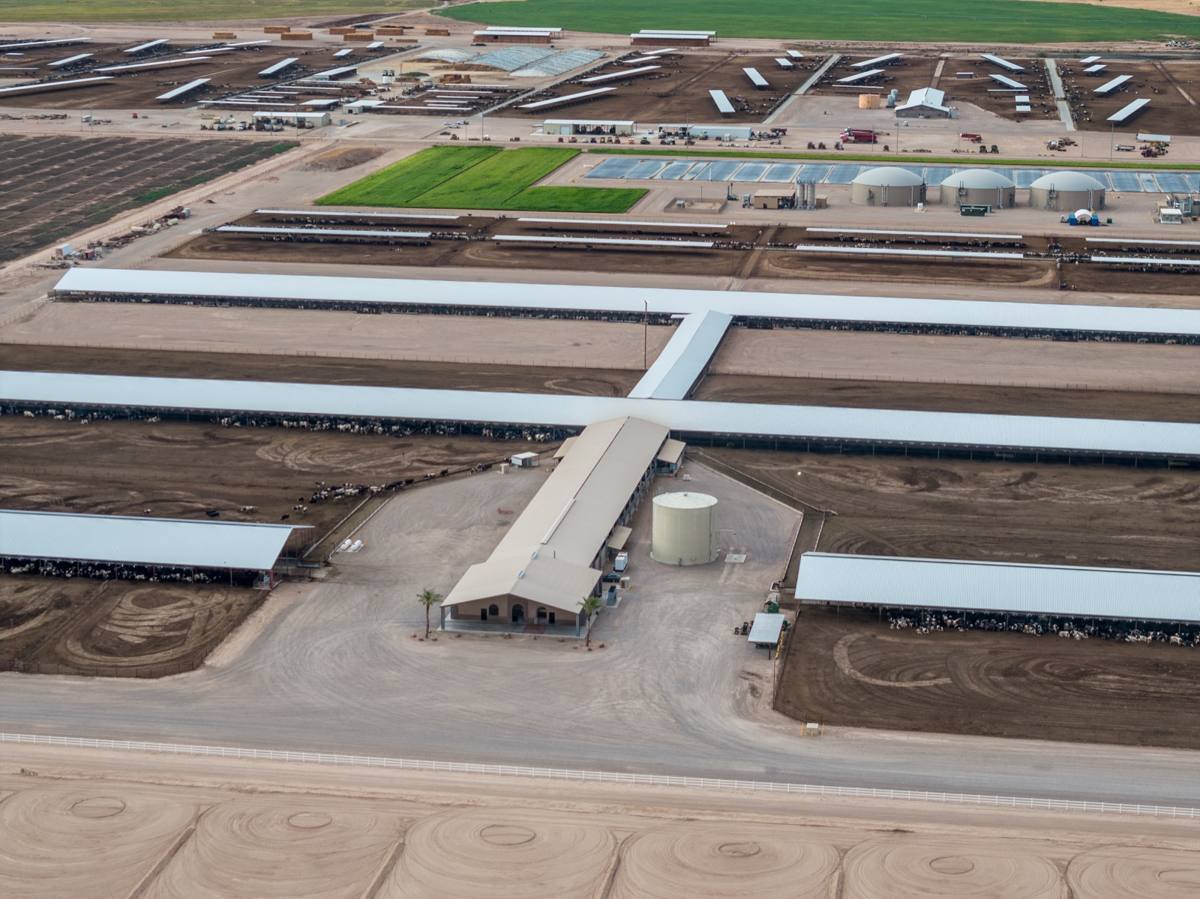
Same cereal. A fraction of the footprint. ♡
Kinder by default
Every glass of plant milk is a glass that didn't need a cow. No placard required (though we do like a placard). Here's what the everyday dairy system asks of animals — and the gentle way around it.
Mothers & calves
In commercial dairy, calves are usually separated from their mothers within hours or days of birth — and both cows and calves show clear behavioural signs of distress afterwards.
Weary & Chua 2000, Applied Animal Behaviour Science
Lives cut short
A cow's natural lifespan is 15–20 years. In commercial herds, most dairy cows are culled at four to six, once their milk yield starts to drop.
USDA National Animal Health Monitoring System
Multiply by millions
There are around 270 million dairy cows in the world. Every carton of plant milk is one small ask fewer — of every single one of them.
FAO dairy production data
The kinder swap is growing
The global plant milk market is projected to reach roughly $84 billion by 2034. Kindness, it turns out, scales rather well.
Market Reports World
Made for more of us
For most adults on Earth, plant milk is simply the easier option. The nutrition, with sources instead of wellness-fluff.
Lactose-free by nature
Around two-thirds of adults worldwide have some degree of lactose malabsorption. For most people alive, plant milk is the comfortable default — dairy is the odd one out.
Storhaug et al. 2017, The Lancet Gastroenterology & Hepatology
Light on saturated fat
Most plant milks are naturally low in saturated fat, and several — almond, soy, hemp — lean towards the heart-friendlier unsaturated kind instead.
Harvard T.H. Chan School of Public Health
Fortified to match
Fortified cartons carry dairy-equivalent calcium (~120 mg per 100 ml), usually with vitamin D, B12 and iodine riding along. Flip the carton, look for "fortified" — that's the whole trick.
British Dietetic Association
Protein, sorted
Soy milk brings around 8 g of protein per cup — shoulder to shoulder with dairy — and pea milk matches it. Well-planned plant-based eating covers protein comfortably.
USDA FoodData Central · Academy of Nutrition & Dietetics
Little extras
Each milk brings its own party trick: oat has beta-glucan fibre linked to healthy cholesterol, almond is rich in vitamin E, and soy carries much-studied isoflavones.
EFSA health claims register
The bigger picture
Plant-forward eating patterns are consistently linked with lower risk of heart disease and type 2 diabetes. A better glass of milk is an easy place to start.
The BMJ · EAT-Lancet Commission 2019
Good for you. Good for everyone. ♡
Go deeper: our full health guide, with Plant Based Health Professionals UK
You asked.
Fair enough.
The questions everyone Googles, answered honestly.
Is plant milk really better for the planet than dairy?
Yes — by every major measure. The largest food-systems study to date (Poore & Nemecek 2018, published in Science, ~38,700 farms across 119 countries) found dairy produces around three times the greenhouse gases, uses around ten times the land and two to twenty times the freshwater of plant milks, per litre. There's no plant milk that isn't a big improvement.
Doesn't almond milk use loads of water?
Almond is the thirstiest plant milk — and it still uses less than half the freshwater of dairy per litre. If water's your priority, soy and oat sip rather than gulp: up to ~90% less than dairy. Every plant milk is a water win; some are just bigger wins.
Is soy milk driving deforestation?
Over three-quarters of the world's soy is grown to feed farmed animals, not people (Our World in Data). Soy milk is a small slice of the crop, and most food-grade soy for Europe comes from outside deforestation hotspots. Ironically, swapping dairy for soy milk reduces total soy demand — because it cuts out the animal feed in the middle.
What about protein and calcium?
Soy milk matches dairy's protein almost exactly (~3 g per 100 ml). Fortified plant milks carry calcium at dairy-equivalent levels (~120 mg per 100 ml), usually with B12, iodine and vitamin D added. Flip the carton and look for "fortified" — that's the whole trick.
Isn't plant milk ultra-processed?
Most cartons are plants + water, filtered, plus fortification and a pinch of stabiliser so it pours and foams nicely. And unlike dairy, you can make the homemade version in five minutes with two ingredients: oats and water.
Can one person's swap actually matter?
One daily glass swapped for a year saves roughly the emissions of driving several hundred kilometres, plus thousands of litres of water (based on Poore & Nemecek 2018 per-litre figures). Now multiply by everyone taking the 7-Day Challenge. Small choices, big difference — it's kind of our whole thing. ♡
Convinced? Curious? Either works.
Try one simple swap a day for a week — we'll send you everything you need.
Join the 7-Day ChallengeLearn something, try something ♡