Home → The Milk Library → Amaranth Milk
🥛 Pseudocereal MilksAmaranth Milk
Amaranth was sacred to the Aztecs, who grew this tiny, blushing seed as a staple to rival maize and shaped it into ritual figures bound with honey — a tradition that survives in Mexico's beloved alegría sweets, puffed amaranth pressed into joyful bars. Like its Andean cousin quinoa, amaranth is a pseudocereal and a complete protein, unusually rich in lysine, calcium and iron, and naturally free of gluten. As a milk, nobody's really discovered it yet: no major commercial carton exists, but home cooks blend the cooked seeds into a smooth, faintly earthy drink with a gentle sweetness and a hint of pepper. It's lovely warmed with cinnamon in the spirit of Mexican atole. The milk aisle will catch up eventually; until then, it's all yours.
Emerging — few commercial brands yet
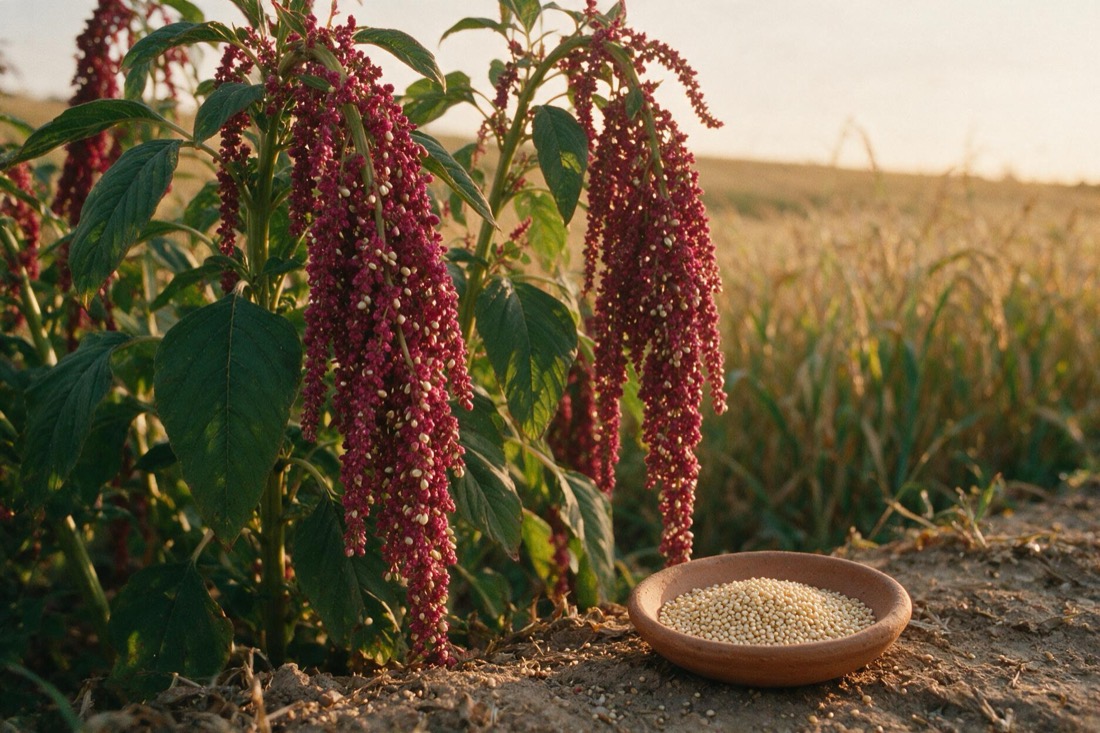
First, the plant.
Origin
Mesoamerica; a sacred staple of the Aztec empire
Tastes like
Smooth and faintly earthy, gently sweet with a peppery whisper
Best for
Home-made milks, warm spiced drinks and atole-style comfort
Sources & citations
- Amaranth: Modern Prospects for an Ancient Crop — National Academies Press, 1984
- Amaranth, in Alternative Field Crops Manual — Purdue University NewCROP / University of Wisconsin Extension, n.d.