Home → Tips
Switching tipsGoing dairy-free,
made easy
Twenty tips for making the switch, and not a vague one among them. Why your tea splits (and how to stop it). Getting the nutrition right. Shopping without the guesswork. All checked with dietitians and the orgs who do this all day.
In the kitchen

Reach for a “barista” blend in hot drinks
Standard plant milks split in tea and coffee — the heat and acidity make the plant proteins clump. Barista editions add pH buffers and a little extra fat, so they stay smooth and steam into proper foam. Soya and oat barista blends froth best.
Warm it, add it last, never boil it
Curdling comes from a sudden heat-and-acid shock. Gently warm plant milk before it meets hot coffee, add the milk last to tea once it’s cooled a touch, and keep it below a simmer (about 60–68°C). Boiling almost guarantees a split.
Match the milk to the job
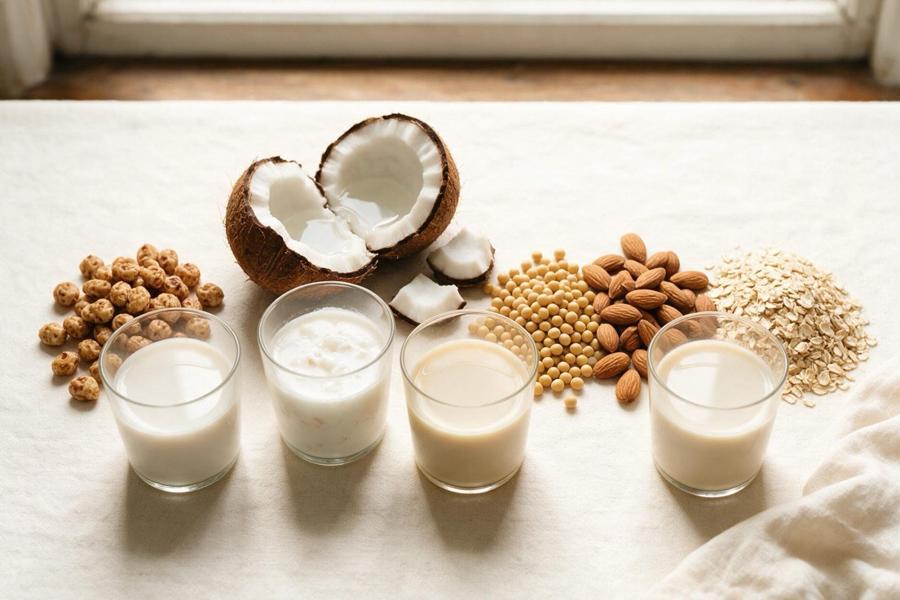
Oat is the all-rounder for coffee, sauces and thickening; soya is highest in protein and best for frothing and savoury cooking; coconut is rich for curries and desserts; cashew makes creamy pasta sauces; almond is light for cereal and smoothies.
Swap 1:1 — but keep it plain
In most recipes plant milk is just the liquid, so any variety works cup-for-cup. The one trap is grabbing a sweetened or vanilla carton, which wrecks savoury dishes — always use unsweetened and unflavoured (soya is closest to dairy).
Block butter, not tub spread, for baking
Pastry and shortbread need a firm fat you can rub in cold for flaky layers. Vegan baking blocks behave like cold butter; soft tub spreads hold too much water and bake greasy.
Aquafaba for whites, flax for binding
Whip chickpea water (aquafaba) for meringues and mousses, or use 3 tbsp as one egg in cakes. To bind cookies and pancakes, mix 1 tbsp ground flaxseed with 3 tbsp water and rest 10 minutes to gel.
Make instant vegan buttermilk
Stir 1 tsp lemon juice or vinegar into a cup of soya milk and rest 10 minutes until it thickens. The acid reacts with baking soda for extra lift and a gentle tang in scones, pancakes and cakes.
Keep nutritional yeast handy
“Nooch” flakes have a naturally cheesy, savoury flavour — stir into white sauces, sprinkle over pasta or popcorn, or add to mash. Build a cheesy hit with nooch, miso and smoked paprika instead of chasing a perfect cheese clone.
Get the nutrition right
Buy fortified — and shake the carton
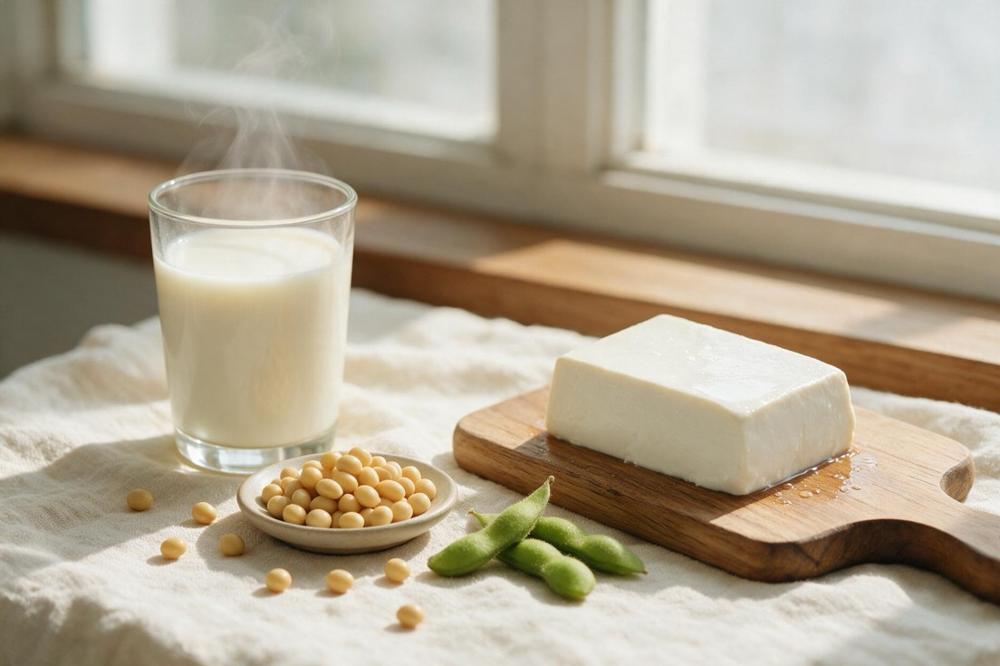
Plant milks only give you real calcium, iodine and vitamins B12/D if they’re fortified, and many organic ranges aren’t — so check the label. Added calcium settles, so give the carton a good shake before every pour.
Build calcium from a few sources
UK adults need around 700mg of calcium a day. Hit it with fortified plant milk (about 120mg per 100ml, like cow’s milk), calcium-set tofu, tahini and sesame, and greens such as kale and pak choi.
Sort your B12
B12 isn’t reliable in plant foods, so use fortified foods a couple of times a day or take a daily supplement of at least 10mcg. A cheap, simple habit that protects your nerves and blood.
Want protein? Choose soya or pea
Soya and pea milks give around 3g of protein per 100ml — close to cow’s milk — while almond, oat and rice are much lower. If your milk is doing a job in smoothies or porridge, reach for soya or pea.
Don’t forget iodine and vitamin D
Plant milks are low in iodine unless fortified (don’t rely on seaweed — it’s erratic). And everyone in the UK should consider a 10mcg vitamin D supplement from October to March; choose a vegan D3.
Go unsweetened; vegan cheese as a treat
Pick unsweetened milks and yoghurts to skip added sugar. Most vegan cheeses are coconut-oil based and low in protein and calcium — lovely occasionally, but lean on fortified milks, yoghurt, tofu and soya for everyday nutrition.
Making it stick
Learn dairy’s disguises
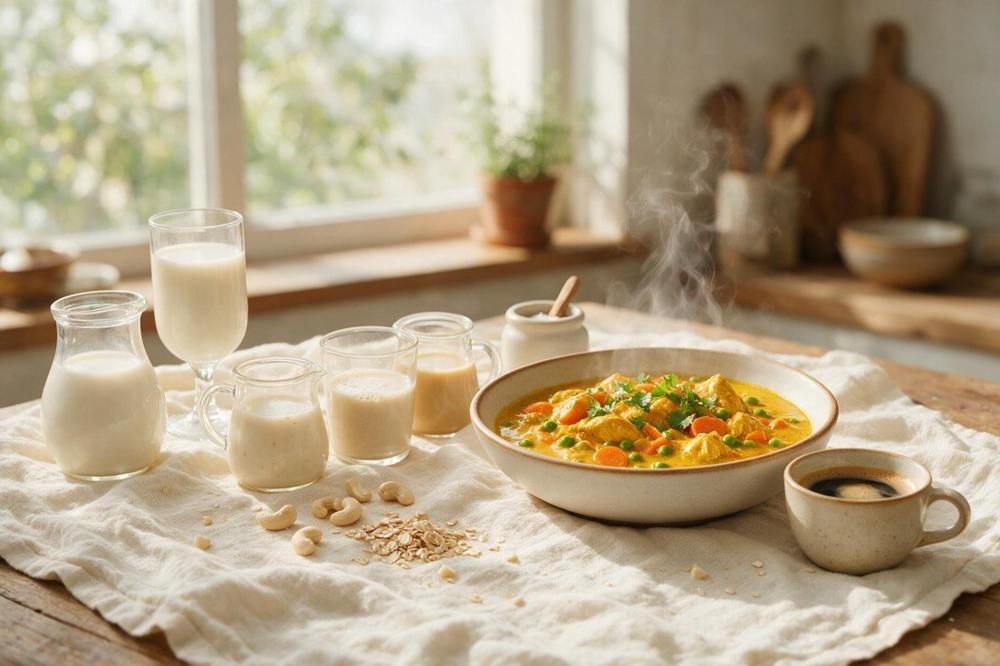
Milk hides as whey, casein and caseinates, lactose, milk solids, buttermilk, ghee and butterfat. And “non-dairy” isn’t the same as dairy-free — trust “vegan” or “plant-based” wording instead.
Use the bold allergen text as a shortcut
UK law makes milk (and 13 other allergens) stand out in bold in a pre-packed ingredients list. Scan the bold words first and you can accept or reject a product in seconds.
Swap one thing at a time
Don’t overhaul everything at once. Start with the easy win — plant milk in tea, coffee and cereal — then butter, then yoghurt, and tackle cheese last once your tastebuds have adjusted.
Keep easy staples in
A quick fridge makeover — plant milk, a block butter, yoghurt, a melting cheese, oat cream — plus a couple of batch-cooked basics means you’re never stuck reaching for dairy out of desperation.
Eat out smarter
Many Thai, Vietnamese, Chinese, Japanese, Lebanese and Ethiopian dishes are naturally dairy-light. Tell the server you avoid butter, ghee, cream and paneer, and ask what a dish is cooked in — HappyCow helps you find places.
Be kind to yourself — cravings fade
Cheese cravings are real (casein releases mild feel-good casomorphins), but they weaken the longer you go dairy-free. Bring a dish to social meals, and lean on free recipe libraries and 30-day challenges for support.
Put it into practice
Start with one swap a day. Take the 7-Day Plant Milk Challenge, or grab something from the recipe collection and just cook.
You’ve got this. ♡
With thanks to our friends
Switch4Good · Viva! · ProVeg · PCRM · British Dietetic Association · The Vegan Society
General guidance, not medical advice — if you have specific dietary needs, check with your GP or a registered dietitian.