The cost
no carton shows.
Behind every pint is a mother and a calf. Viva! — the UK’s leading vegan campaigning charity — has spent three decades documenting what dairy asks of them. Every claim below is sourced.
Made for calves, really. ♡

Our animals section is proudly supported by Viva! (find out more)
Separated within hours
Cows only make milk after pregnancy — and for her milk to be sold, her calf can’t be the one drinking it.
12–24 hours
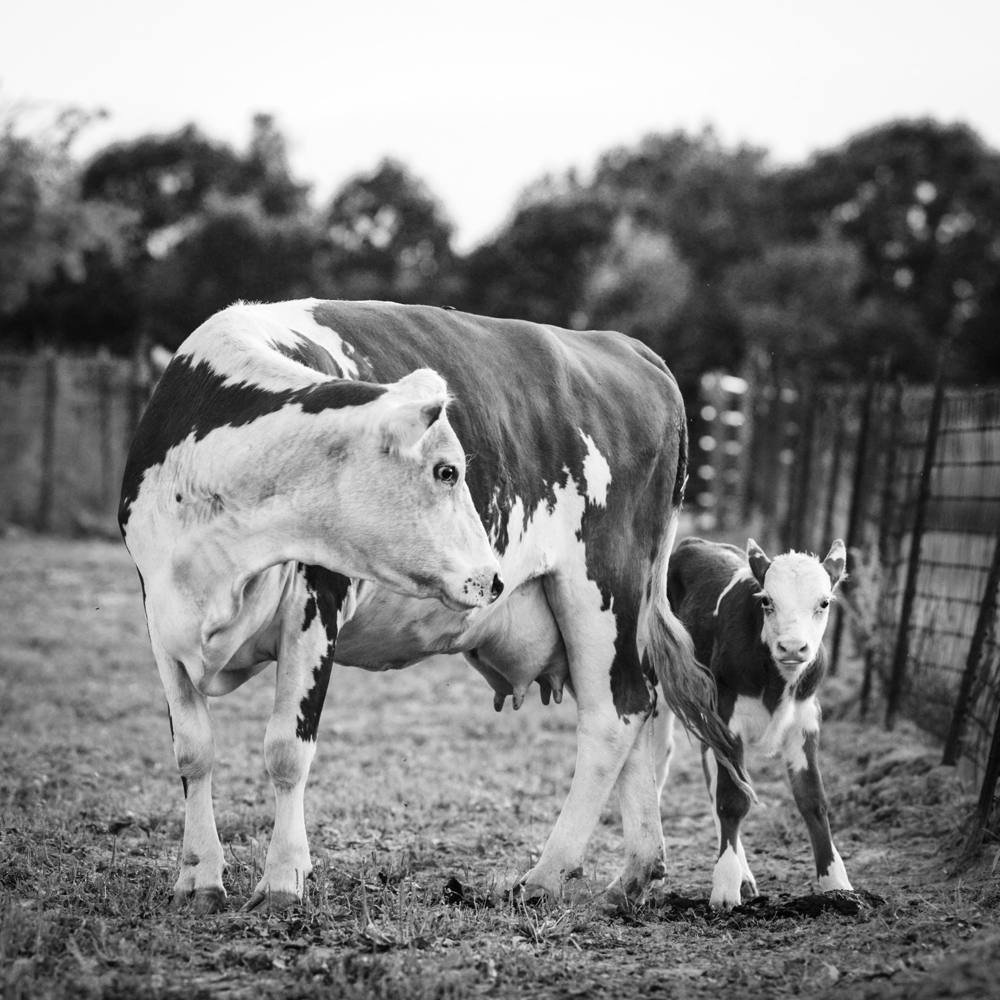
Following a nine-month pregnancy, the vast majority of calves are separated from their mother within 12 to 24 hours of birth. Left to themselves, she would suckle her calf for the best part of a year.
Viva! · Defra cattle welfare code 2024
The grief is documented
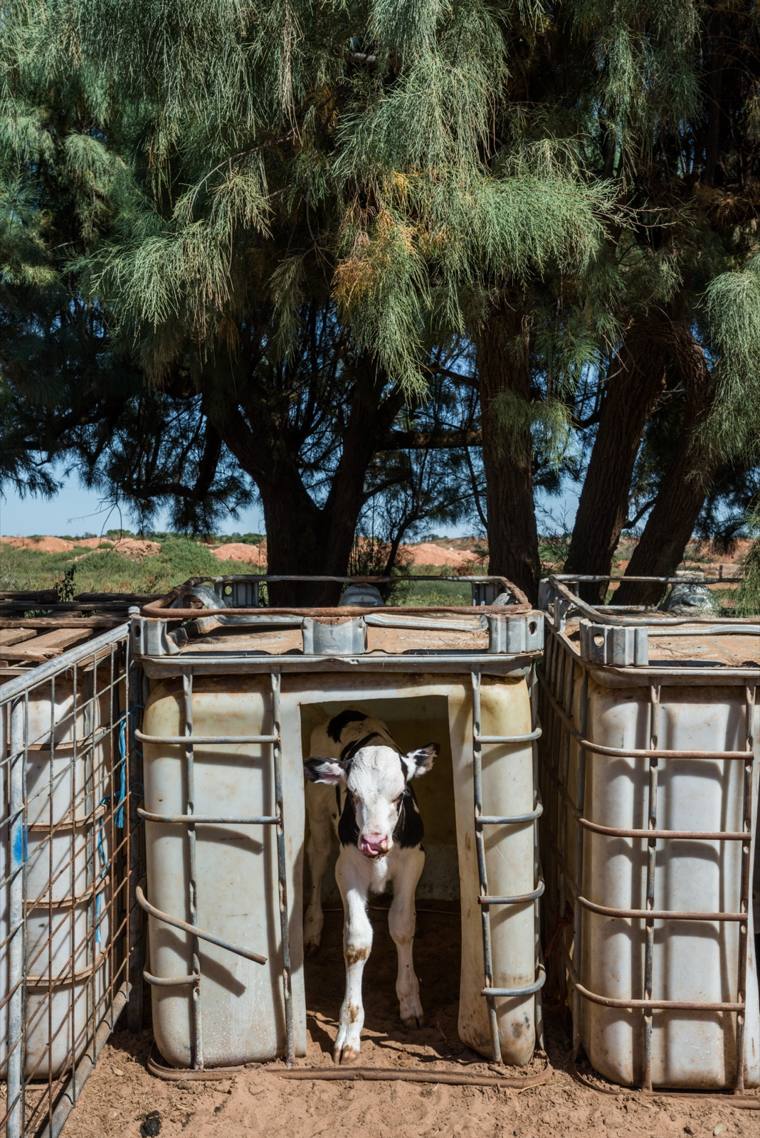
Mother cows have been known to bellow for days for their calves, and calves kept in isolation hutches show clear signs of depression. Calves left with their mothers for their first three months develop significantly better social skills.
Viva! · Gutmann et al. 2015 · Gaillard et al. 2014, PLoS One
Born the wrong sex
Male dairy calves can’t make milk — and UK government data shows what happens next.
The 2025 number
Government data obtained by Viva! through Freedom of Information shows 60,745 male dairy calves under eight months old were killed in 2025 — including 31,026 under two months old, killed on farm.
Rural Payments Agency data, obtained by Viva! via FOI
An industry under pressure
After a 2018 Guardian investigation estimated 95,000 male calves a year were being shot within days of birth, supermarkets called for a ban on routine killing — and the industry has turned to sexed semen to reduce male births.
Viva! · The Guardian 2018 · AHDB 2024
Pregnant and milked, on repeat
A dairy cow’s life runs to the industry’s calendar, not hers.
Every year, another calf
A dairy cow is expected to give birth every year — 90–95% of UK dairy cows are impregnated by artificial insemination — and for roughly seven months of each year she is both pregnant and producing milk.
Viva! · Defra Animal Welfare Committee 2026
A fifth of a lifetime
Cows can naturally live 15–20 years. Dairy cows are typically worn out — through infertility, mastitis or lameness — and slaughtered at around six years old, after three to four lactations.
Viva! · RSPCA
Bred to the limit
Modern milk yields are an athletic feat no cow signed up for.
27 litres a day
The average UK dairy cow now produces 8,278 litres a year — around 27 litres a day, up more than 20% in twenty years. A suckling calf would only ever draw about two litres at a time.
Viva! · AHDB UK milk yield
Mastitis & lameness
Mastitis — a painful udder infection — is the most frequent and costly illness in dairy herds worldwide, and AHDB estimates suggest around a quarter to a third of UK dairy cows are lame at any one time.
Viva! · NADIS · AHDB
She’d rather you had the oat one. ♡
The shed era
The pastoral picture on the label is increasingly out of date.
Never grazing
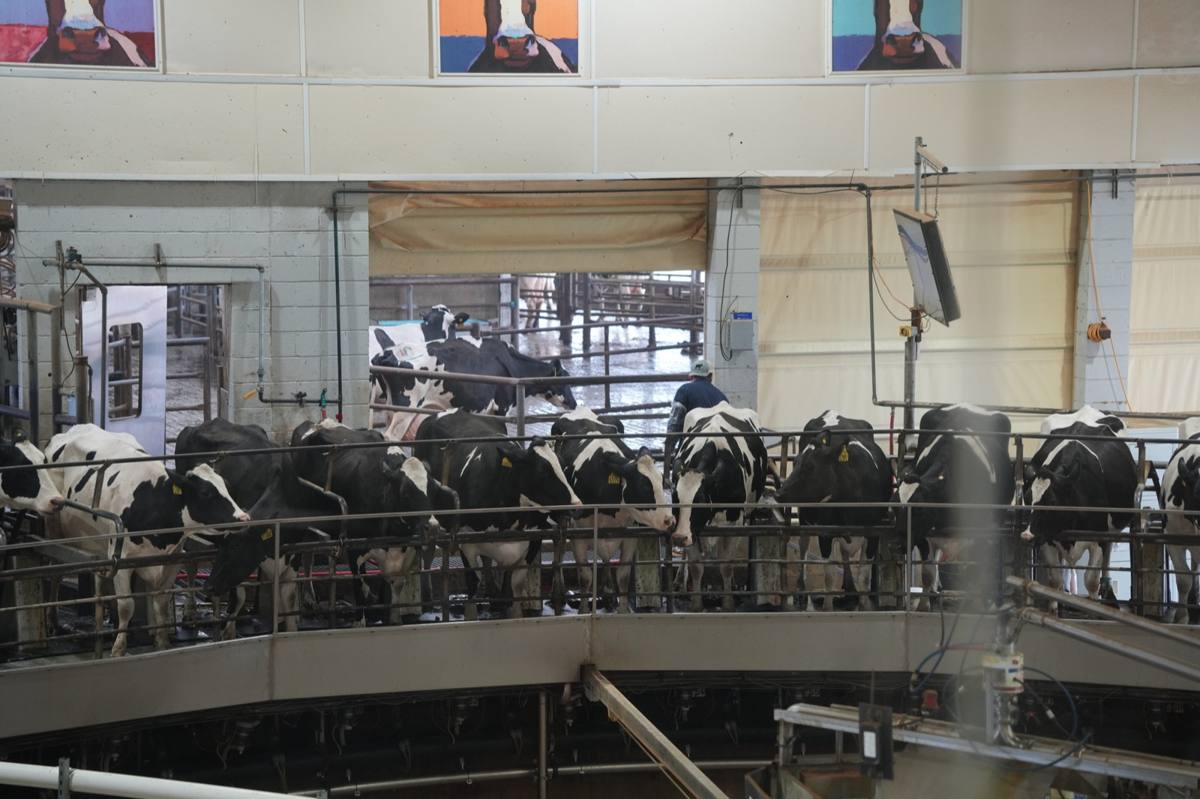
Zero-grazed cows never graze outside at all. In 2026 the Bureau of Investigative Journalism reported that UK intensive dairy farms had more than doubled in a decade, with ‘megadairies’ of 700+ cattle doubling to over 40.
Viva! · Bureau of Investigative Journalism 2026
What the cameras found
Viva!’s undercover investigations at UK dairy farms — including suppliers of major brands — have documented year-round confinement, ‘snatch calving’ at birth, and calves still in solitary hutches at 12 weeks, contrary to government guidance.
Viva! Campaigns investigations, 2021–2023
UK dairy, counted
The scale of the industry, in its own official figures — as compiled by Viva!.
1.6 million cows
Around 1.6 million cows are in the UK milking herd right now — part of a GB female dairy herd of 2.5 million, the lowest on record.
Viva! · AHDB, January 2026
Milk, halved
UK cow’s milk consumption has halved since 1974 — from nearly three litres per person per week to about 1.6.
Viva! · Current Developments in Nutrition, 2025
Fewer, bigger farms
Average herd size has grown from about 70 cows per farm in the early 1990s to over 200 today, while the number of producers has fallen from around 35,000 to 7,000.
Viva! · Defra · AHDB
Choose the kinder glass
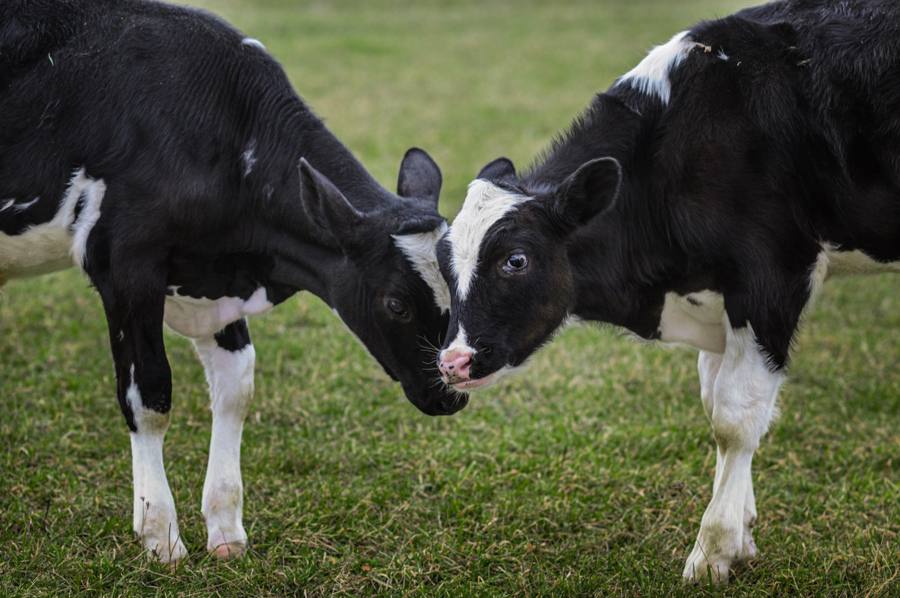
Seven days of plant milk. One less thing asked of her.
Join the 7-Day ChallengeKinder by default. ♡
Sources & citations
Content on this page is informed by the published work of Viva! and the sources they cite:
- Dairy cows — Viva!, last updated March 2026 (carries Viva!'s full reference list, incl. Defra, AHDB, RSPCA, NADIS, EFSA and peer-reviewed studies)
- Scary Dairy — campaign hub — Viva!
- Zero Grazing investigation — Viva! Campaigns, 2021–2022
- Home Farm investigation — Viva! Campaigns, 2022–2023
- Dairy — Corporate Cruelty (Tafarn Y Bugail investigation) — Viva! Campaigns, 2023
- Code of recommendations for the welfare of livestock: cattle — Defra, GOV.UK
- Gaillard C, Meagher RK, von Keyserlingk MAG et al. — Social housing improves dairy calves' performance — PLoS One, 2014
- UK milk yield — AHDB
- Levitt T — Dairy's 'dirty secret': it's still cheaper to kill male calves than to rear them — The Guardian, 2018
Figures and findings on this page are drawn from Viva!'s published research and investigations, and the sources they cite.
Photography on this page appears courtesy of We Animals, used under their humane-education licence. Individual photographer credits appear under each image.