Here is a fact that tends to stop people mid-sip: most adults on Earth cannot comfortably digest fresh milk. Not "some". Most. Somewhere around two-thirds of the world's grown-ups lose the ability in childhood, and always have. If that sounds like a disorder afflicting the majority of our species, it's worth turning the question around — because the biology suggests the opposite. The unusual ones, genetically speaking, are the milk-drinkers.
Nothing here is wrong with anyone. This is a story about an evolutionary accident, and about how a minority trait ended up masquerading as the human norm.
The enzyme that's meant to switch off
Every healthy human baby is born able to digest lactose, the sugar in milk. We make an enzyme called lactase to break it down, which is exactly what you'd expect of a mammal designed to live on its mother's milk. The interesting part is what happens next. In most mammals — and in most humans — the gene for lactase dials down after weaning. Once you no longer need to drink milk, your body stops investing in the machinery to process it.
Adults who keep producing lactase have a trait geneticists call lactase persistence, and worldwide it is the minority condition. Only about 35% of adults globally can fully digest lactose. The other roughly 65% are "lactase non-persistent" — not ill, not intolerant in any dramatic sense, simply grown-up mammals whose bodies have moved on from milk.
A very recent, very patchy mutation
Adult milk-drinking exists because of one of the fastest pieces of evolution in our species' recent history.
The mutations behind lactase persistence are young — they spread within roughly the last 10,000 years, which in evolutionary terms is yesterday afternoon. In Europe, a single genetic variant known as −13910T rose from rare to common at a pace almost without parallel in the human genome. And it didn't happen once. Different populations — in northern Europe, in the cattle-herding belts of East and West Africa, in the Middle East and parts of South Asia — evolved different* mutations that do the same job, an example of the same solution being invented several times over.
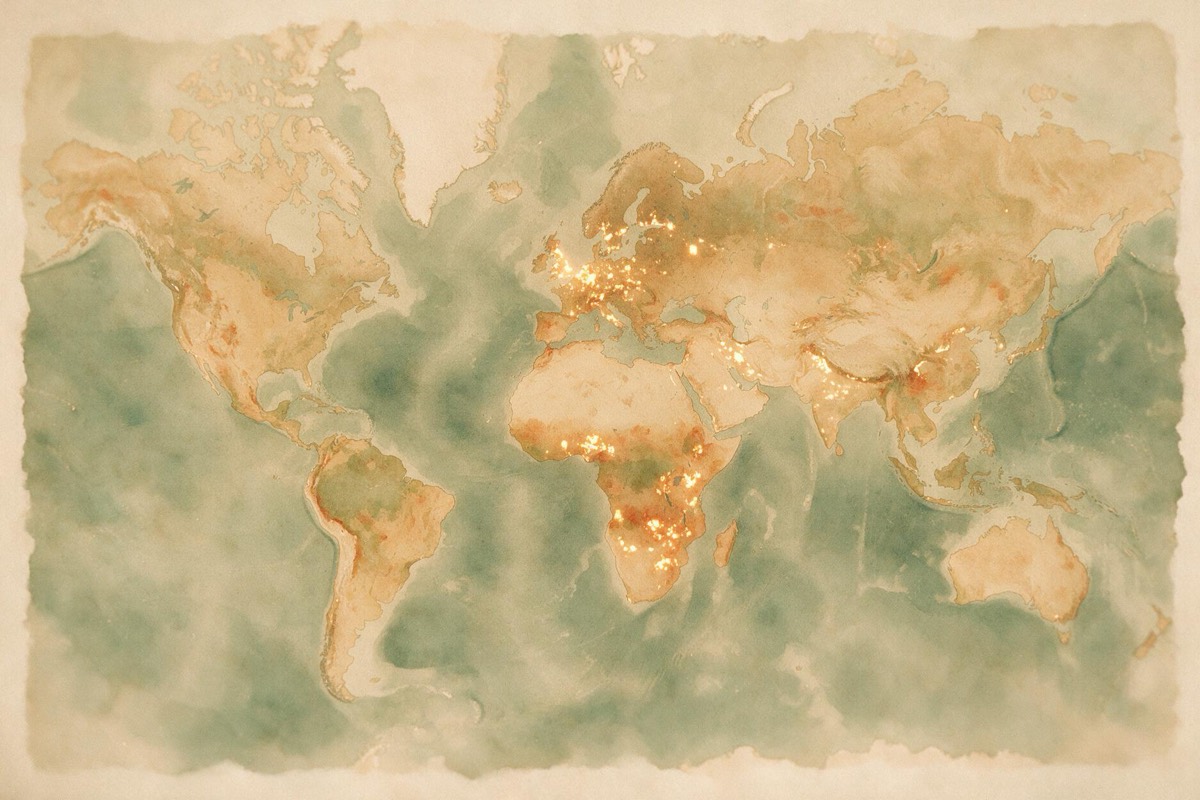
That is why the modern map of lactose tolerance is so strangely blotchy. Persistence is common in people of northern European descent and in specific African, Middle Eastern and South Asian herding groups, and rare or absent almost everywhere else. It doesn't track continents or "races"; it tracks the particular ancestors who happened to keep livestock — and who happened to inherit the mutation.
Milk came first — the biology caught up later
For a long time the tidy explanation was that people started dairying, the milk-digesters got a nutritional boost, and natural selection did the rest. A landmark 2022 study in *Nature* complicated that story in a way that's genuinely surprising.
Led by Richard Evershed at the University of Bristol, the team analysed fat residues from nearly 7,000 pieces of ancient pottery and found that Europeans were consuming milk for thousands of years before lactase persistence became common. In other words, plenty of people who couldn't fully digest lactose were drinking milk anyway — presumably fermenting it into cheese and yoghurt, which are far gentler on the gut, or simply putting up with the consequences.
What tipped the balance, the researchers argue, wasn't the everyday nutritional perk of milk. It was famine and disease: during shortages or epidemics, drinking unfermented milk you couldn't process could turn dangerous, and being able to digest it cleanly became a matter of survival. The mutation didn't spread because milk was a treat. It spread because, in the worst of times, it could be the difference between living and not.
"Intolerance" is the wrong word for the human default
All of which puts a familiar label under some pressure. We call the majority condition "lactose intolerance", as though it were a malfunction — a body that's failed to do something it ought to. But you can't really be intolerant of something you were never built to consume as an adult.
The medical world increasingly agrees. The Physicians Committee for Responsible Medicine describes lactose intolerance not as a disease but as "the normal human condition", and the American Medical Association has called it "a common and normal condition". In the UK, the British Dietetic Association notes that it's especially common among people of Asian and African-Caribbean heritage, and that it can emerge at any age. None of this is a defect. It's the factory setting for most of our species.
Turning the story the right way up
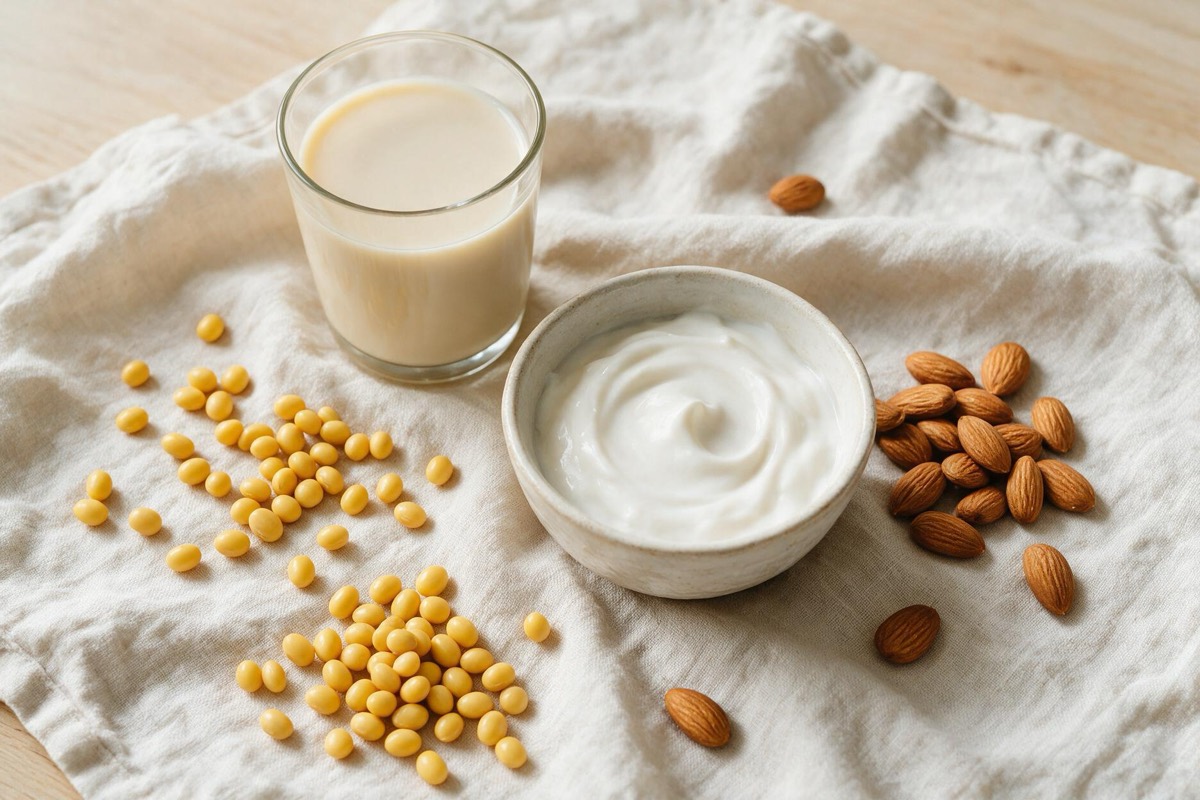
Once you sit with all this, the usual framing flips. If most of the world's adults have never comfortably drunk fresh milk, then plant milks were never really "dairy substitutes" for those cultures. Dairy was the thing they couldn't easily use — and the tiger-nut, soy, coconut and almond milks we explore in our 5,000-year history of plant milk weren't stand-ins. They were the milk that actually suited the people drinking them.
That's not an argument that anyone should feel bad about a splash in their tea. Fermented dairy has fed cultures beautifully for millennia, and those who digest lactose happily are welcome to it. It's simply an invitation to drop the idea that one kind of milk is the natural default and everything else is an accommodation. Biologically, there is no default. There's just a marvellously varied species that has found many good ways to make milk from many good things.
If your own body sits with the global majority, none of that is a problem to be fixed — and there's plenty of company. Our dairy-free tips can make the swaps painless, while the environmental impact numbers offer a second, planet-sized reason to explore what else a glass can hold. Turns out the milk most humans can't drink was never the only milk on the table.