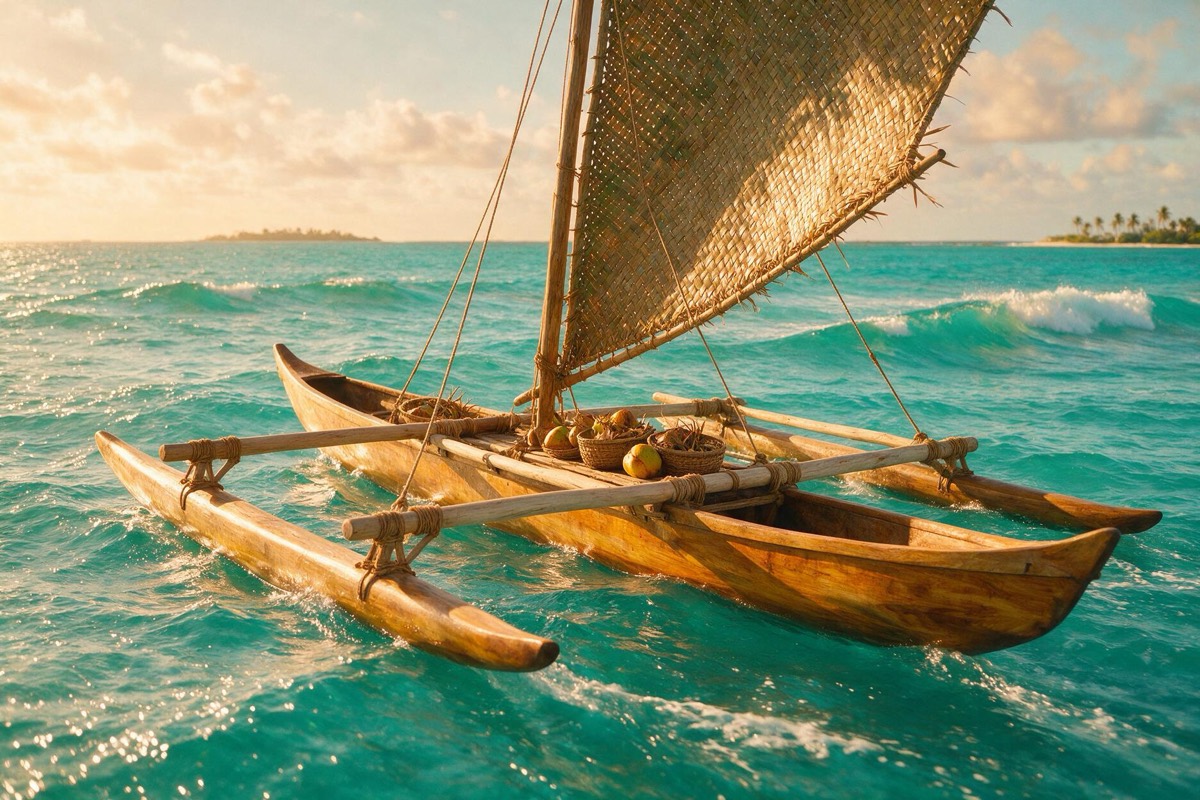
Picture a canoe — twin hulls lashed together, a triangular sail of woven pandanus, low in the water under the weight of people, pigs, chickens and seed stock. It is somewhere in the open Pacific, three or four thousand years ago, and there is no land in sight for days. Among the cargo, stacked like cannonballs, sit dozens of coconuts. They are not a snack. They are the reason the voyage is possible at all.
The coconut made the settling of the largest ocean on Earth possible, and the milk we squeeze from its flesh descends directly from that voyage. To understand coconut milk in your curry, you have to understand the canoe.
The tree that packed for the trip
Sailors have a phrase for the coconut palm: "one palm, whole voyage." A single tree provisions almost everything a seafarer needs. The green nut holds sterile, drinkable water — precious cargo on a saltwater desert. The mature flesh is dense food and, pressed, becomes rich milk and oil. The fibrous husk, or coir, twists into rope strong enough to lash a hull together without a single nail. The hard shell makes cups and bottles; the timber makes structure; the fronds make sails, thatch and baskets. As botanists studying the plant's spread note, the coconut supplied both a portable source of food and water and the raw materials for the Austronesian outrigger boats themselves. It's a survival kit that grows on a stalk.
That self-sufficiency is why the coconut travelled with the Austronesian expansion — the migration that began around 3000 BCE, when Neolithic seafarers pushed out from Taiwan and the southern Chinese coast into the islands of Southeast Asia and, over the following millennia, across the Pacific. Their key invention was the outrigger canoe: a float lashed alongside a narrow hull made a boat nearly impossible to capsize, and lashed-together double hulls could carry a whole "colonisation kit" of canoe plants — taro, yam, breadfruit and coconut — to seed the next island.
Two coconuts, two oceans
For a long time nobody knew quite where the coconut had come from — it floats, so it could have drifted anywhere. Genetics finally cracked it. In 2011, a team led by Bee Gunn, Luc Baudouin and Kenneth Olsen analysed more than 1,300 coconuts from across the world and found the tree carries the fingerprints of not one domestication but two, in two different oceans.
"About a third of the total genetic diversity can be partitioned between two groups that correspond to the Indian Ocean and the Pacific Ocean," Olsen explained — conclusive evidence of two separate origins of cultivation. The Pacific coconut, first tended in the islands of Southeast Asia, is the one that carries the clearest marks of human selection: a rounder, thicker-fleshed nut on shorter, quicker-fruiting trees. The Indian Ocean coconut was domesticated independently, most likely around southern India, Sri Lanka and the Maldives.
The clincher is what happened when the two met. Coconuts from Madagascar turn out to be a genetic blend of the two types — a botanical fingerprint of the Austronesian sailors who, around two thousand years ago, carried Pacific coconuts west along the trade routes that linked Southeast Asia to Madagascar and the coast of East Africa. The coconut, in other words, records the map of ancient seafaring in its own DNA.
A world of milk
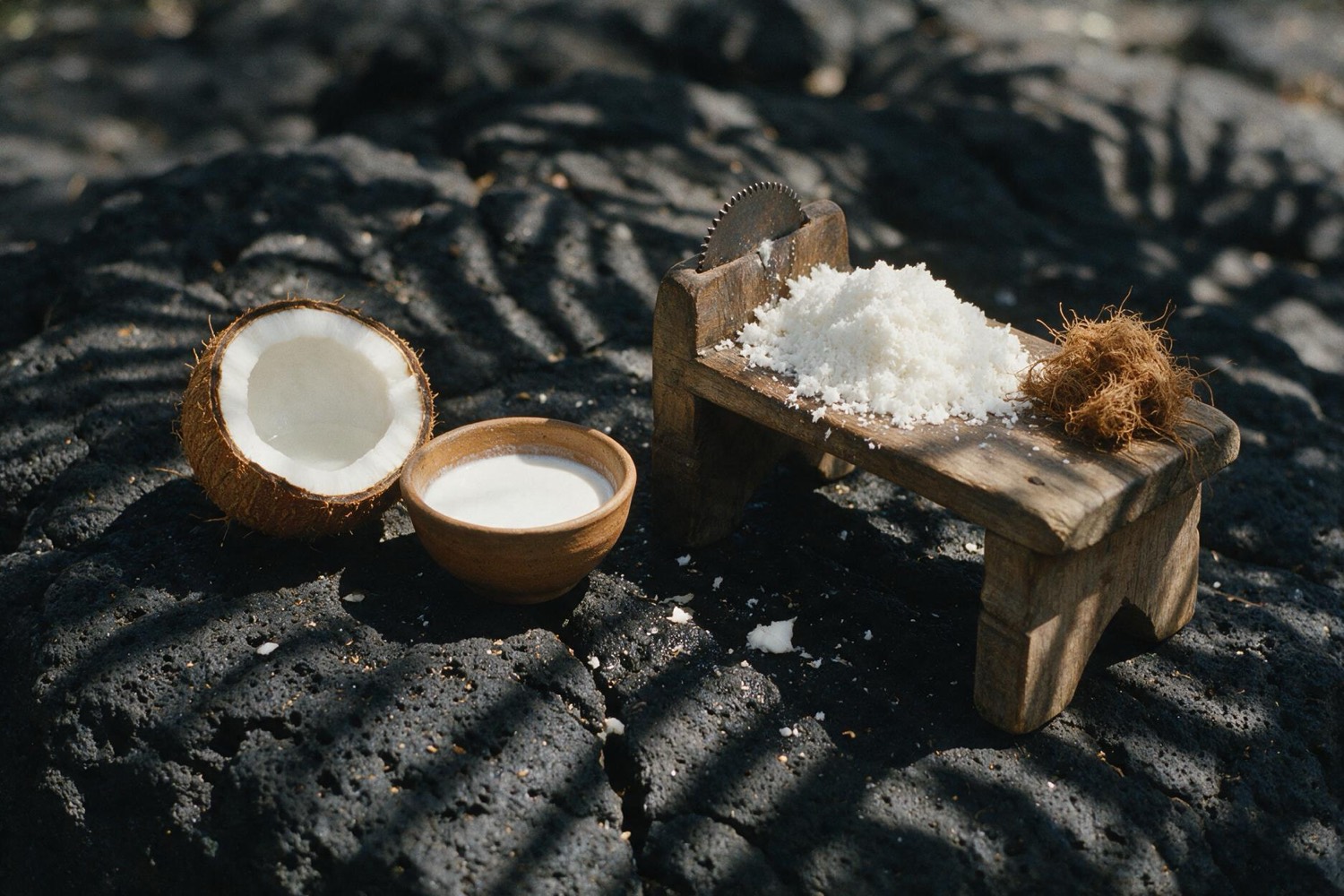
Wherever the palm landed, cooks reached for the same trick: grate the white flesh, steep it in warm water, and squeeze. The first hard press gives thick "coconut cream"; a second, thinner extraction gives the everyday milk. It's one of the oldest plant milks on earth, and it anchors more of the world's great dishes than almost any other ingredient.
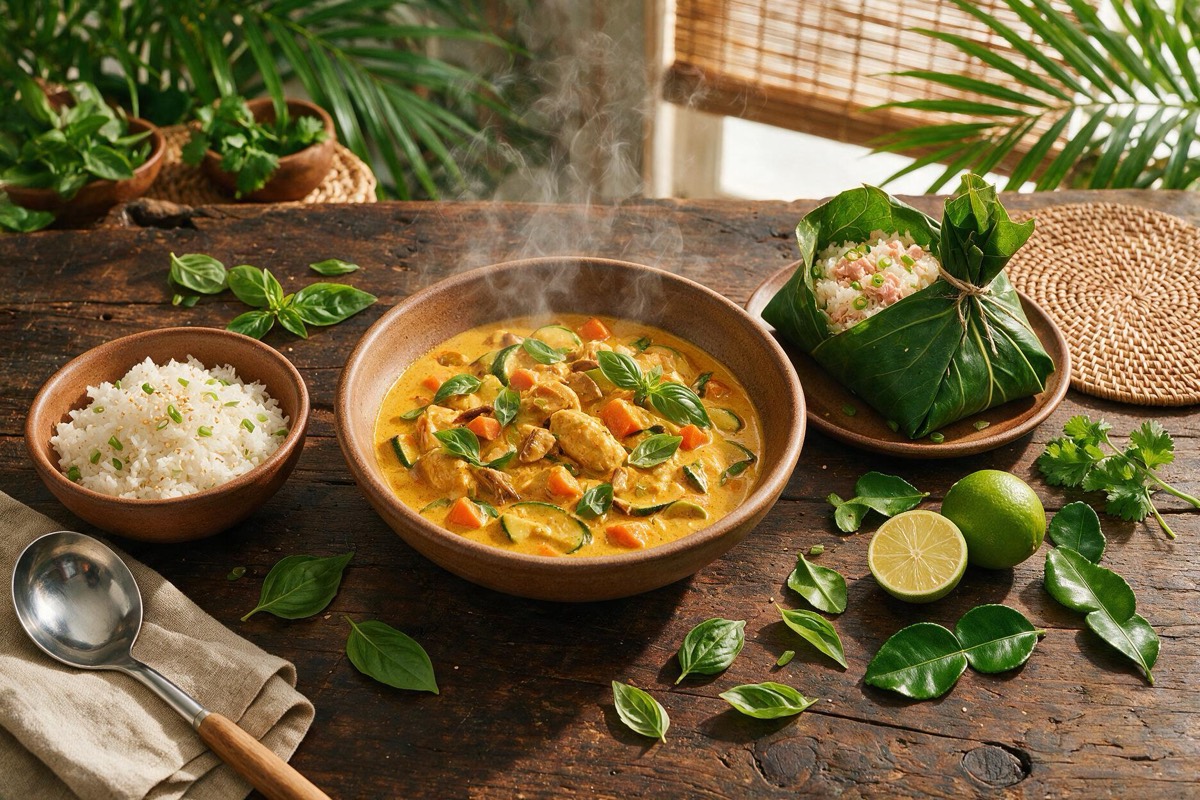
In South India and Sri Lanka it loosens fiery curries and enriches breakfast; in Kerala, fish simmers in it. Cross to Southeast Asia and it is the soul of Thai gaeng, Malaysian rendang slow-cooked until the milk splits and fries the beef in its own oil, and Indonesian nasi lemak, its rice steamed fragrant in coconut. Sail on into the Pacific and you find Fijian kokoda and Samoan palusami, taro leaves baked in coconut cream. Follow the trade winds to the Caribbean and it turns up in Jamaican rice and peas and "rundown"; along the Swahili coast of East Africa it defines the local curries. One ingredient, half the tropics, endlessly reinterpreted — the kind of story our heritage globe was built to tell.
The nut goes global
For most of its history coconut milk stayed within the coconut belt, a taste of the tropics you had to travel to meet. Not anymore. Cheap tinned coconut milk turned it into a global pantry staple, and the plant-milk boom then handed it a second career in the chiller cabinet, poured into flat whites and blended into dairy-free ice cream. The global coconut milk market was worth roughly US$4 billion in 2024 and is climbing fast, driven by exactly the shift toward plant-based eating this campaign celebrates.
A little perspective, though: coconut milk is gloriously rich but light on protein — more a source of flavour and fat than a straight swap for dairy in your cereal. Nutrition-by-numbers was never the point. The point is that a single tree once let human beings cross the widest water on the planet, and left the silkiest curry base ever devised as a souvenir. Ready to cook with a few thousand years of history? Our recipes start with the curries, naturally.